
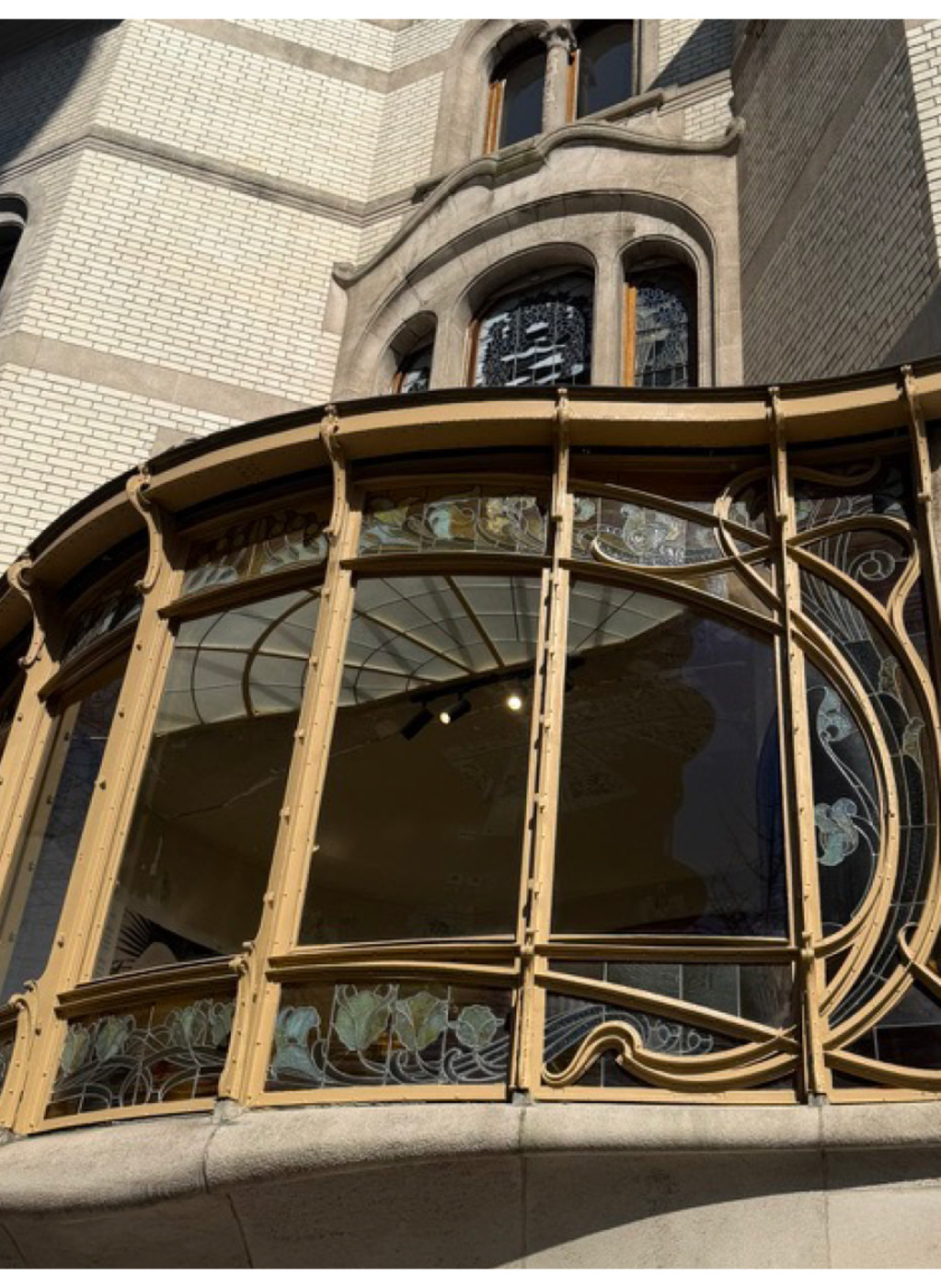
Art Nouveau's high point in Brussels runs roughly from Horta's Hôtel Tassel in 1893 to the years just before the First World War. The wristwatch, as an object most men would actually wear rather than carry in a pocket, only became commonplace after that war — soldiers came back with trench watches strapped to their wrists, and the habit stuck. By the time it did, Art Nouveau had already given way to the tighter geometry of Art Deco.
The two never really overlapped commercially. There is no vintage Art Nouveau wristwatch to restore, no period dial layout to lift and reproduce faithfully. Every curve on a Kobus case is a translation, not a quotation — an architectural vocabulary of whiplash lines and structural ornament, applied to an object it was never built for.
That absence turns out to be useful. Without an original to be faithful to, the question changes from "what did this look like" to "what did this believe." Which is why Kobus borrows the discipline of Art Nouveau — ornament and structure as the same decision, nothing applied afterwards — rather than any single motif lifted from a Horta facade.